Udhampur VDG Firing: One Killed, Another Injured as Village Defence Guard Opens Fire After Brawl
By: News Desk | 15 Aug 2026
Udhampur, Jammu & Kashmir: A violent incident involving members of the Village Defence Guard (VDG) system in Jammu and Kashmir’s Udhampur district has raised fresh questions about the risks and responsibilities associated with arming civilians in the region.
A Village Defence Guard was killed and another was critically injured on Friday after a colleague allegedly opened fire following a brawl, officials said. The incident occurred amid an altercation among VDG members, with the precise motive behind the shooting still being investigated.
The incident is significant not only because of the immediate loss of life but also because it brings renewed attention to the history of Village Defence Committees (VDCs) and their transformation into Village Defence Guards (VDGs).
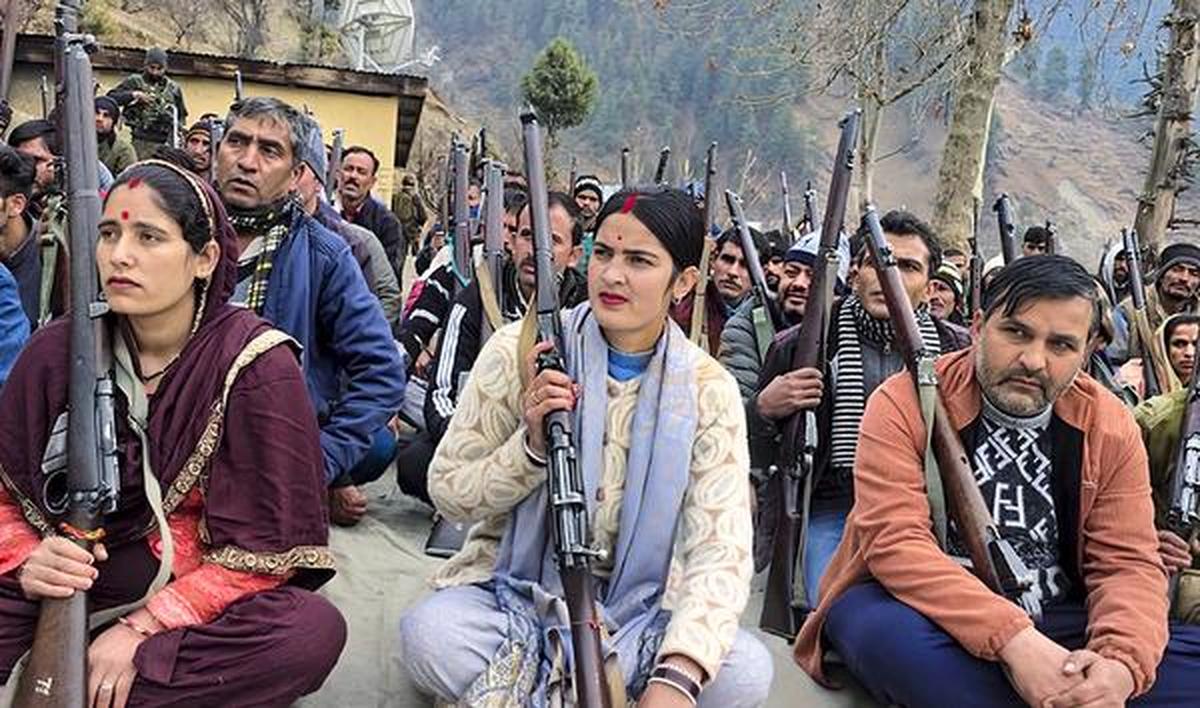
The armed village-defence system was originally created during the height of militancy in the Jammu region to give vulnerable communities a means of protecting themselves until security forces could arrive. Three decades later, the same model continues in a restructured form.
But with firearms in the hands of civilian volunteers, one question remains unavoidable:
How can community-based security be maintained without allowing weapons intended for counter-terrorism and self-defence to become a source of civilian violence?
What Happened in Udhampur?
According to officials cited in the latest reports, the incident took place on Friday in Udhampur district.
A dispute reportedly escalated into a brawl involving Village Defence Guards. During the confrontation, one VDG member allegedly opened fire on his colleagues.
One guard was killed, while another sustained critical injuries.
The injured person was taken for medical treatment.
Officials said the immediate motive behind the confrontation was not yet clear and that further investigation was underway.
The incident is therefore best described at this stage as a firing following a brawl among VDG members, rather than as a militant attack or a security operation.
That distinction matters.
VDGs are civilian volunteers operating under an officially sanctioned government scheme designed to support security forces in vulnerable areas. Their weapons are intended for village defence and security duties—not for resolving personal disputes.
VDC or VDG? Why the Difference Matters
The term Village Defence Committee (VDC) is widely used when referring to the armed civilian defence system that emerged in the 1990s.
However, the present institutional framework is the Village Defence Guards Scheme (VDGS) 2022.
The 2022 scheme formally superseded the earlier 1995 arrangement and introduced a restructured system in which members are known as Village Defence Guards. A Jammu & Kashmir High Court judgment has also recorded that the 2022 scheme came into force from August 15, 2022, replacing the earlier scheme.
So, while the two terms are often used interchangeably in public discussion, VDG is the technically correct term for the current system.
Why Were Village Defence Committees Created?
The origins of the system lie in the violent years of the 1990s.
Militancy that had emerged in Kashmir during the early part of the decade spread into parts of the Jammu region, particularly the mountainous areas of the erstwhile Doda district.
Remote villages were particularly vulnerable because security forces could take considerable time to reach isolated settlements.
The demand for arming local residents gained momentum after the 1993 Kishtwar massacre, in which 13 people were killed. The deteriorating security situation and concerns about the migration of vulnerable communities eventually contributed to the Union government’s decision to establish Village Defence Committees.
The formal VDC scheme was introduced through Home Department Order No. 293 of 1995, with effect from October 1, 1995.
The basic idea was simple
Equip selected villagers with firearms so they could:
- defend their villages against militant attacks;
- protect vulnerable communities;
- alert police and security forces;
- provide local intelligence;
- hold positions until reinforcements arrived; and
- use their knowledge of local terrain to assist security operations.
The model was particularly relevant in remote mountainous areas where conventional security deployment could not provide an immediate response everywhere.
How the Original VDC System Worked
Under the 1995 framework, village defence groups generally included 10 to 15 armed civilians.
The volunteers were selected by the district administration and police, with preference given to people such as ex-servicemen, ex-policemen and able-bodied local residents considered capable of contributing to village security.
The scheme provided firearms through the police.
The original framework records an average allocation of five .303 rifles and 100 rounds per weapon in a village, although the actual allocation could vary depending on population, vulnerability and security requirements.
This was not simply an informal village arrangement.
The system was designed as a component of the broader security architecture, with coordination between the groups, district administration and police.
VDCs Became a Force Multiplier in Remote Jammu
During the peak years of militancy, geography was one of the biggest challenges for security forces.
The mountainous terrain of Doda, Kishtwar, Ramban, Udhampur, Rajouri and Poonch provided militants with forests, ravines and difficult-to-access routes.
Local volunteers had one major advantage: they knew the villages and terrain intimately.
They could identify unfamiliar movement, alert authorities and defend their homes while waiting for security reinforcements.
In this sense, VDCs functioned as a force multiplier.
They did not replace the police or Army. Their intended role was to supplement the formal security system.
But the VDC Model Also Faced Controversy
The system was never free from controversy.
Giving firearms to civilians inevitably created questions about:
- weapons training;
- accountability;
- selection of volunteers;
- political and social influence;
- disciplinary mechanisms;
- alleged misuse of weapons; and
- what should happen to armed volunteers when the immediate security threat declines.
As militancy declined in several areas, the relevance and functioning of some VDCs came under scrutiny.
The system also faced allegations of intimidation and other abuses in certain places, contributing to calls for greater oversight and eventually to restructuring. Recent reporting on the evolution of the scheme notes that successive governments moved to disband or reduce some VDC structures after allegations of intimidation and atrocities.
This history is important because the current debate over VDGs cannot be separated from the experience of the 1990s.
From VDCs to VDGs: What Changed in 2022?
The security situation in parts of the Jammu region changed again in the late 2010s and early 2020s.
Militant attacks in Rajouri, Poonch, Reasi, Doda, Udhampur and adjoining areas renewed concerns about the security of remote villages.
The 2022 restructuring was therefore intended to create a more organised and supervised village-defence mechanism.
The Union government approved the revised arrangement in 2022, and the J&K administration formally sanctioned the Village Defence Guards Scheme-2022 in August that year.
The new system introduced several changes
Under the 2022 scheme:
- members are designated Village Defence Guards;
- the groups function under the direction of the district SP/SSP;
- leaders in more vulnerable areas receive a monthly remuneration of ₹4,500;
- other VDG members receive ₹4,000 per month;
- the arrangement is more formally integrated with district security structures.
These figures and the administrative structure are recorded in the 2022 scheme and subsequent court proceedings.
The objective was to retain the local-security advantage of the old system while improving supervision, training and coordination.
Why VDGs Remain Important
The need for VDGs has not disappeared.
The Jammu region continues to include large stretches of difficult mountainous terrain where security forces face challenges in maintaining a permanent presence in every vulnerable settlement.
VDGs can provide:
Early warning: Local residents can identify suspicious movement more quickly.
Terrain knowledge: Villagers understand tracks, forests and mountain routes that may be difficult for outside forces to navigate.
Community protection: They can provide an additional layer of defence in remote settlements.
Intelligence support: Their presence can help security agencies understand local movement and developments.
The government has also continued training VDGs. Recent reporting said Army instructors were conducting training sessions aimed at improving their ability to assist security forces in sensitive and vulnerable areas.
The Other Side of the Debate: What Happens When Guns Enter Personal Disputes?
The Udhampur shooting brings the most difficult question surrounding the VDG model into sharp focus.
A firearm issued for village security can become extremely dangerous if it enters a personal argument.
The present incident reportedly began with a brawl rather than a terrorist attack.
That makes it fundamentally different from the circumstances for which the VDG system was created.
The government therefore faces a delicate balancing act.
It needs armed community volunteers in vulnerable areas where they can genuinely contribute to security. At the same time, it must ensure that firearms are:
- securely stored;
- used only for authorised purposes;
- regularly inspected;
- handled only by trained personnel;
- properly accounted for; and
- subject to disciplinary and criminal action when misused.
The answer is not necessarily to dismantle the entire VDG structure.
The more immediate question is whether oversight and weapons-control mechanisms are strong enough to prevent individual disputes from becoming deadly.
VDGs and the Question of Accountability
One of the strongest arguments for the 2022 restructuring was greater institutional oversight.
Unlike an informal armed civilian group, VDGs operate within a government-sanctioned framework and under district police supervision.
But formal oversight on paper must translate into practical controls on the ground.
That means periodic verification of members, weapons audits, training refreshers, clear rules of engagement and immediate reporting of misuse.
The system should also have a mechanism for temporarily withdrawing firearms when a member becomes involved in a serious personal dispute, criminal investigation or behaviour that raises concerns about their fitness to possess a weapon.
The Udhampur incident demonstrates why such safeguards matter.
The Broader Security Picture in Jammu
The VDG debate is particularly sensitive because the Jammu region has witnessed renewed militant activity in recent years.
Remote districts such as Udhampur, Kathua, Doda, Kishtwar, Rajouri, Reasi and Poonch have increasingly featured in security operations and counter-terror investigations.
In April 2024, a VDG member, Mohammad Shareef, was killed after being critically injured during an encounter with suspected terrorists near Chochru Gala heights in Udhampur’s Basantgarh area. Police said VDG members had accompanied a security team responding to information about suspicious movement.
That incident illustrated the original purpose of the scheme: VDG members operating alongside security forces against an armed threat.
The latest Udhampur shooting illustrates the opposite risk: the weapon itself becoming part of an internal civilian confrontation.
Both incidents need to be understood together.
Not Every VDG Incident Is a Failure of the System
It would also be misleading to conclude from a single shooting that the entire VDG programme has failed.
VDGs have been established precisely because some remote areas face genuine security vulnerabilities.
The state has historically relied on local participation because security forces cannot physically be everywhere at all times.
The real policy question is therefore not simply whether civilian volunteers should have weapons.
It is:
How much weaponisation is necessary, who should be authorised to carry firearms, and what level of oversight is required?
Those are questions that become increasingly important as the security environment changes.
What the Udhampur Incident Should Trigger
The immediate priority is a transparent investigation into the shooting.
But beyond the criminal investigation, authorities could use the incident to review the wider VDG system.
1. Immediate weapons audit
District authorities should ensure that all VDG-issued firearms and ammunition are properly accounted for.
2. Regular psychological and behavioural assessment
Possessing a firearm is a serious responsibility. Volunteers involved in repeated disputes or exhibiting dangerous behaviour should be reassessed.
3. Refresher training
Training should cover not only combat and weapons handling but also firearm discipline, conflict de-escalation and rules governing use of force.
4. Stronger weapons-control protocols
Firearms should not be casually carried or stored in circumstances where personal arguments can quickly escalate.
5. Clear disciplinary mechanisms
Misuse of a government-authorised weapon must carry swift and clearly defined consequences.
6. Better police supervision
The VDG structure is intended to function under district police oversight. That oversight must remain active rather than becoming merely administrative.
A Three-Decade Experiment Faces a New Test
The history of Village Defence Committees in Jammu and Kashmir is ultimately a story of changing security needs.
In the 1990s, the government faced militant attacks in remote villages and limited capacity to protect every settlement. Armed civilian defence was seen as a practical response.
By 2022, the security environment had changed enough for the government to restructure the system as Village Defence Guards.
But the underlying dilemma remains.
The same weapon that can protect a village from an armed attacker can cause tragedy when used recklessly inside the village.
That is why the Udhampur incident should prompt neither an emotional dismissal of the VDG system nor an uncritical defence of it.
It should prompt a serious review of how civilian firearms are issued, monitored and controlled.
The Bottom Line
The killing of one VDG member and the critical injury of another in Udhampur is a tragic reminder that community-based security comes with equally serious responsibilities.
VDGs were created to stand between vulnerable villages and militant violence. Their role remains relevant in parts of Jammu and Kashmir where difficult terrain and security threats continue to pose challenges.
But effectiveness cannot be measured only by how well armed volunteers respond to external threats.
It must also be measured by how responsibly weapons are handled when there is no terrorist attack, no encounter and no battlefield—only an ordinary dispute between people.
The Udhampur shooting therefore raises a question that goes beyond one police case:
If civilians are entrusted with firearms in the name of community defence, the system must be equally strong on training, supervision, accountability and prevention of misuse.
That balance will determine whether the VDG model remains a valuable layer of Jammu and Kashmir’s security architecture—or becomes vulnerable to the very risks it was designed to prevent.